Limited Government: Why Power with Boundaries Matters to Everyone

Have you ever wondered what would happen if one authority controlled every choice you make—what you read, how you work, where you travel, even what you say? Most people, when they pause to think about it, feel uncomfortable with that idea. This discomfort sits at the heart of a powerful political concept often discussed but rarely explored in plain language: limited government. At its core, this idea is about drawing lines around power so that freedom has room to breathe. In this article, we’ll unpack the meaning, history, principles, benefits, challenges, and modern relevance of this system in a way that feels human, relatable, and grounded in everyday life.
Understanding the Core Idea
What does limited authority really mean?
When people hear the phrase, they sometimes imagine chaos or a weak state. In reality, it’s the opposite. The idea is not to remove rules, but to ensure that public institutions can only act within clearly defined boundaries. These boundaries usually come from a constitution, legal traditions, or shared social values.
Think of it as a referee who keeps the game fair by enforcing the rules, not by playing favorites or changing the score. The referee has authority, but only within the rules of the sport. They can’t suddenly change the score because they feel like it. Their power is real, but it’s restricted for the sake of fairness.
Why the concept matters in daily life
This framework shapes how much control officials have over personal decisions. It affects taxation, law enforcement, education, business regulation, and even freedom of speech. When power is restrained, individuals have more space to make choices, express opinions, and pursue opportunities without constant interference.
A Brief Historical Background
Lessons learned from unchecked power
History offers countless examples of what happens when authority grows without limits. Absolute monarchies, authoritarian regimes, and dictatorships often began with promises of order and stability. Over time, the absence of boundaries led to oppression, corruption, and fear.
People living under such systems rarely had a voice. Laws changed on a ruler’s whim, and dissent was punished rather than heard.
How restraint became a political ideal
In response, philosophers and reformers began arguing for systems that divided and restrained authority. Thinkers like John Locke emphasized natural rights—life, liberty, and property—and insisted that leadership exists to protect these rights, not erase them.
These ideas influenced revolutions and constitutional systems around the world, shaping modern democracies that prioritize legal limits over personal rule.
The Role of Constitutions and Laws
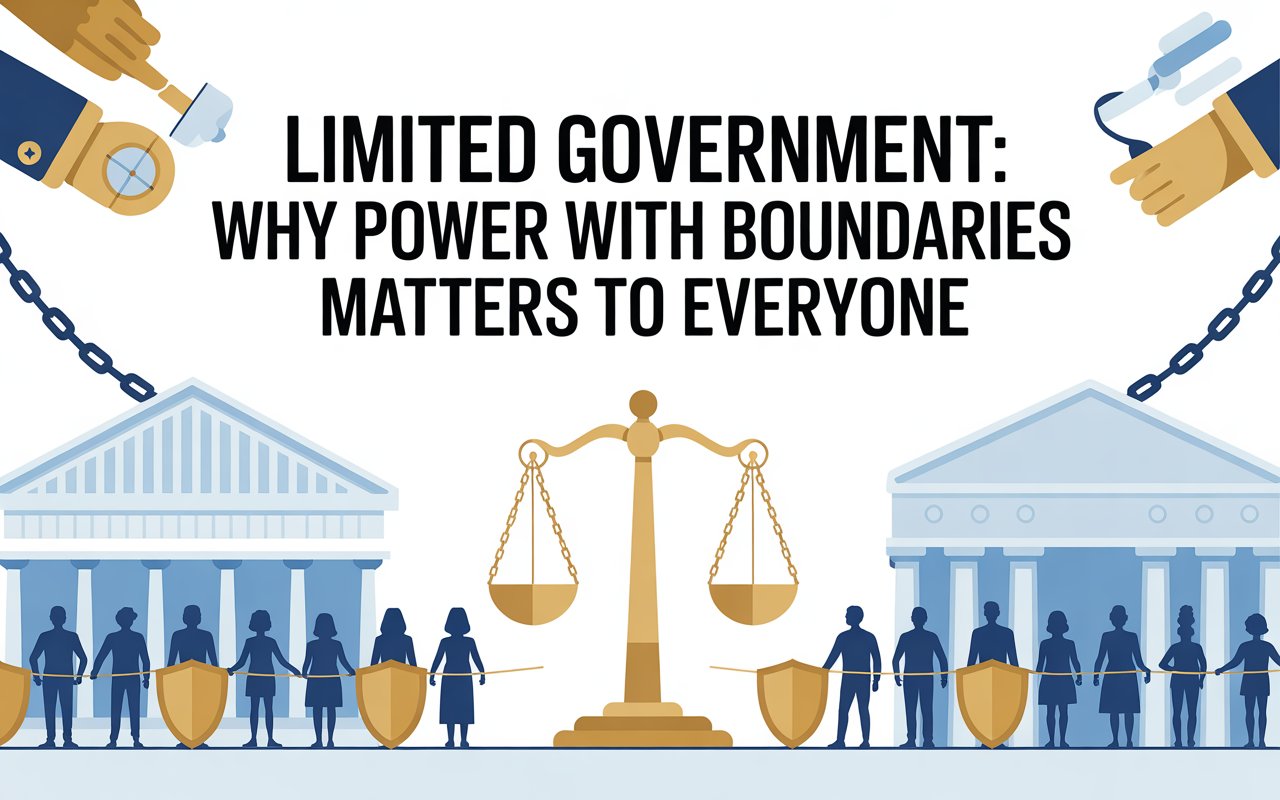
Why written rules matter
A constitution acts like a contract between the people and those who govern. It outlines what leaders can do and, just as importantly, what they cannot do. Without such a document, power becomes flexible in dangerous ways.
Written rules provide clarity. They reduce ambiguity and make it easier to challenge actions that overstep authority.
Law as a shield, not a weapon
In a restrained system, laws exist to protect citizens rather than control them excessively. Courts play a key role here. Independent judges can review decisions and strike down actions that violate agreed-upon limits.
This legal structure ensures that no one, not even those at the top, stands above the rules.
Separation of Powers Explained Simply
Why dividing authority prevents abuse
One of the most effective ways to prevent overreach is to divide responsibilities among different branches. Instead of placing all authority in one set of hands, power is shared.
Typically, one branch makes laws, another enforces them, and a third interprets them. Each keeps an eye on the others.
Checks and balances in everyday terms
Imagine roommates sharing an apartment. One controls the budget, another handles maintenance, and a third manages schedules. If one person tries to dominate, the others can push back. This balance keeps the household functioning smoothly.
In governance, this same logic helps prevent dominance and encourages cooperation.
Individual Freedom at the Center
Why personal liberty is the priority
A restrained system places individuals at the heart of political life. The assumption is simple: people are capable of making decisions about their own lives. Authority steps in only when necessary to protect rights or maintain order.
This approach trusts citizens rather than controlling them.
How rights are protected
Freedom of expression, belief, movement, and association often flourish under this model. These rights aren’t gifts from leaders; they are recognized as inherent. Institutions exist to guard them, not grant them conditionally.
When limits are respected, people feel secure enough to innovate, speak openly, and live authentically.
Economic Implications for Ordinary People
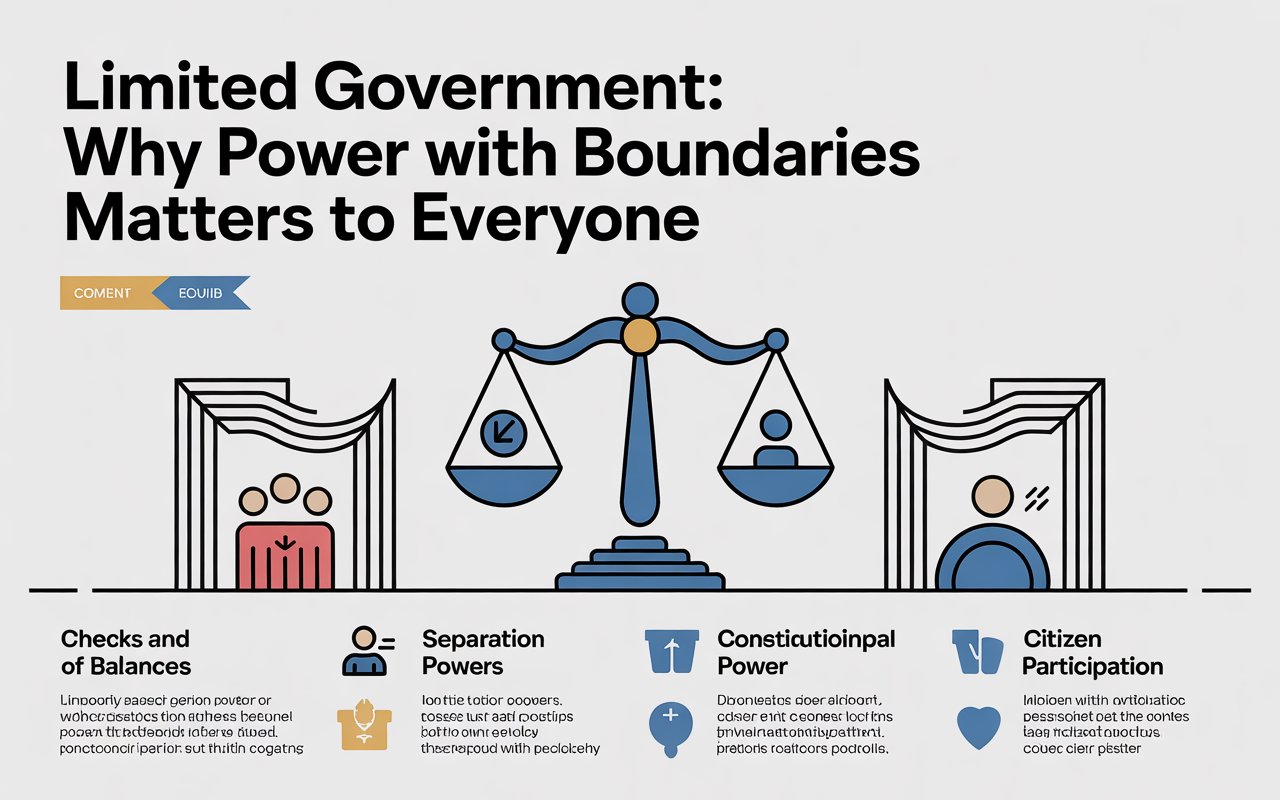
Encouraging opportunity and innovation
When public control over markets is restrained, individuals and businesses have more freedom to create, trade, and compete. This often leads to economic growth, job creation, and technological progress.
Entrepreneurs are more willing to take risks when rules are predictable and fair.
Protecting property and contracts
Clear legal boundaries ensure that property rights are respected and agreements are enforced. This stability builds trust, which is essential for healthy economic activity.
Without trust in the system, people hesitate to invest time, money, or effort.
Social Responsibility and Civic Duty
Freedom doesn’t mean selfishness
One common misunderstanding is that restrained authority encourages people to care only about themselves. In reality, it often strengthens community bonds. When individuals aren’t forced into uniform solutions, they voluntarily support causes they care about.
Charities, local groups, and volunteer networks often thrive in such environments.
The role of citizens
This system depends on active participation. Voting, staying informed, and holding leaders accountable are crucial. Freedom works best when people take responsibility for preserving it.
It’s like tending a garden—you can’t plant seeds and walk away forever. Ongoing care is essential.
Common Misconceptions Clarified
Is less authority the same as no rules?
Not at all. There are still laws, institutions, and enforcement mechanisms. The difference lies in scope and intention. Rules exist to protect rights, not to manage every detail of life.
Does this approach weaken national security?
Some fear that restraint makes a nation vulnerable. In practice, strong defense and limited authority can coexist. Clear legal frameworks ensure security measures remain effective without becoming tools of oppression.
Balance, not absence, is the goal.
Modern Challenges in a Complex World
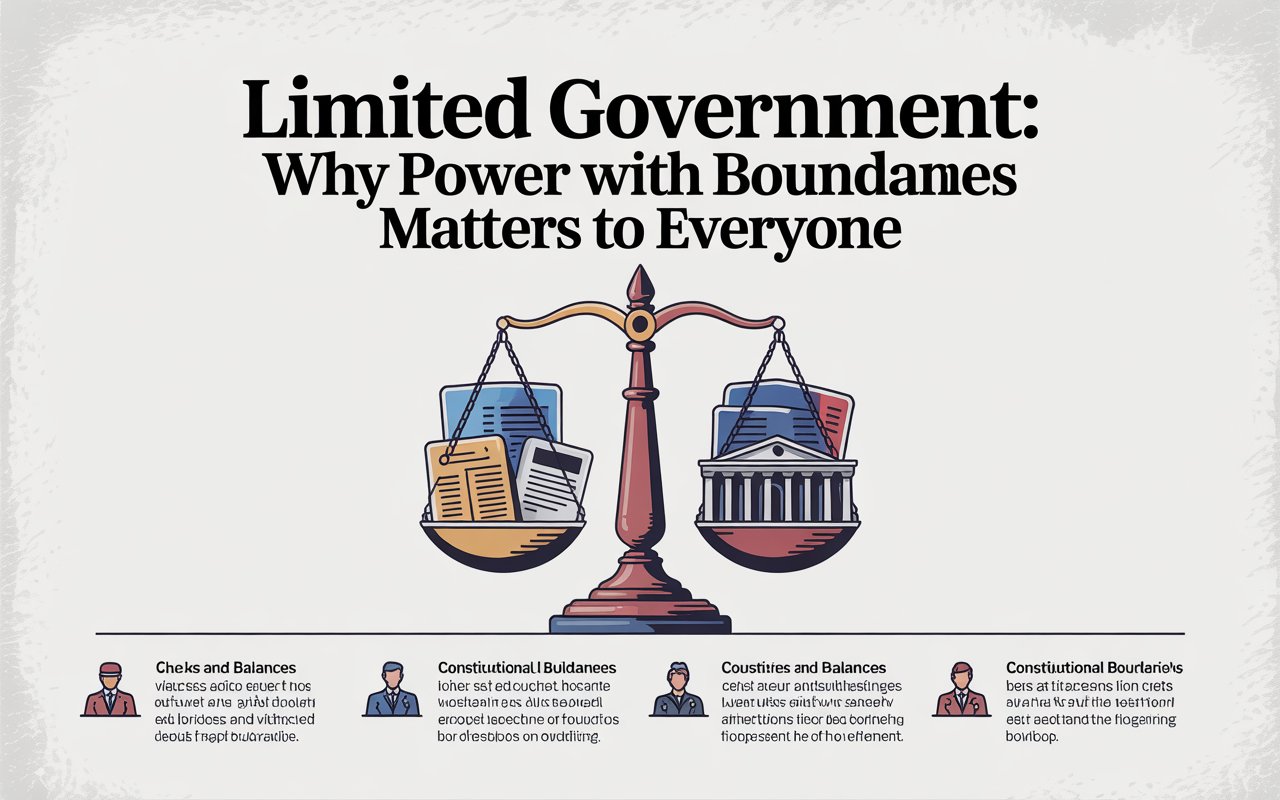
Technology and surveillance concerns
Advances in technology give institutions unprecedented access to data. Without clear boundaries, surveillance can quietly expand beyond acceptable limits.
Debates around privacy, digital rights, and data protection highlight the ongoing relevance of restraint.
Emergency powers and temporary expansion
Crises often lead to expanded authority. While some flexibility is necessary, history shows that “temporary” measures can become permanent if not carefully monitored.
This is where public awareness and legal safeguards play a vital role.
Global Perspectives and Variations
Different cultures, similar principles
Not every country applies restraint in the same way. Cultural values, history, and social norms influence how limits are defined and enforced.
However, the underlying idea—power should not be absolute—appears across diverse political traditions.
Learning from international examples
Some nations emphasize strong courts, others rely on parliamentary oversight, and some focus on local autonomy. Each offers lessons on how boundaries can be maintained in different contexts.
Why the Concept Still Matters Today
Relevance in everyday conversations
From debates about taxation to discussions on education policy, the idea of boundaries shapes public discourse. People instinctively question whether authority has gone too far or not far enough.
These conversations reflect a shared concern for balance.
A safeguard for future generations
Perhaps the most compelling reason this idea endures is its focus on the long term. By limiting authority today, societies protect freedom tomorrow.
It’s a gift passed down, not a privilege borrowed.
Conclusion: Finding the Right Balance
At its heart, limited government is about trust—trust in people to live their lives, trust in laws to protect rights, and trust in systems to correct themselves. It doesn’t promise perfection, but it offers a framework where freedom and order can coexist. Like a well-built fence around a home, boundaries don’t restrict life inside; they make it safer and more secure. In a world full of change and uncertainty, this balance remains as relevant as ever.
Frequently Asked Questions
What is the main purpose of limited government?
Its primary aim is to prevent the concentration of power and protect individual freedoms by setting clear boundaries on authority.
Does limited government mean fewer public services?
Not necessarily. It focuses on scope and accountability rather than eliminating services entirely.
How does a constitution support limited government?
It defines powers, protects rights, and provides mechanisms to challenge overreach through legal processes.
Can limited government exist without democracy?
While democracy supports it, some non-democratic systems may still enforce legal limits, though sustainability is often weaker.
Why do citizens play such an important role?
Active participation ensures leaders respect boundaries and that freedom is preserved through accountability.






Post Comment