Iran Attacks: Latest News, Timeline, and Global
Introduction: Why the World Is Watching Iran Right Now
Few regions on Earth carry the weight that the Middle East does when it comes to global energy, security, and diplomacy. In 2026, Iran is once again at the center of it all — and this time, the stakes are higher than they’ve been in decades.
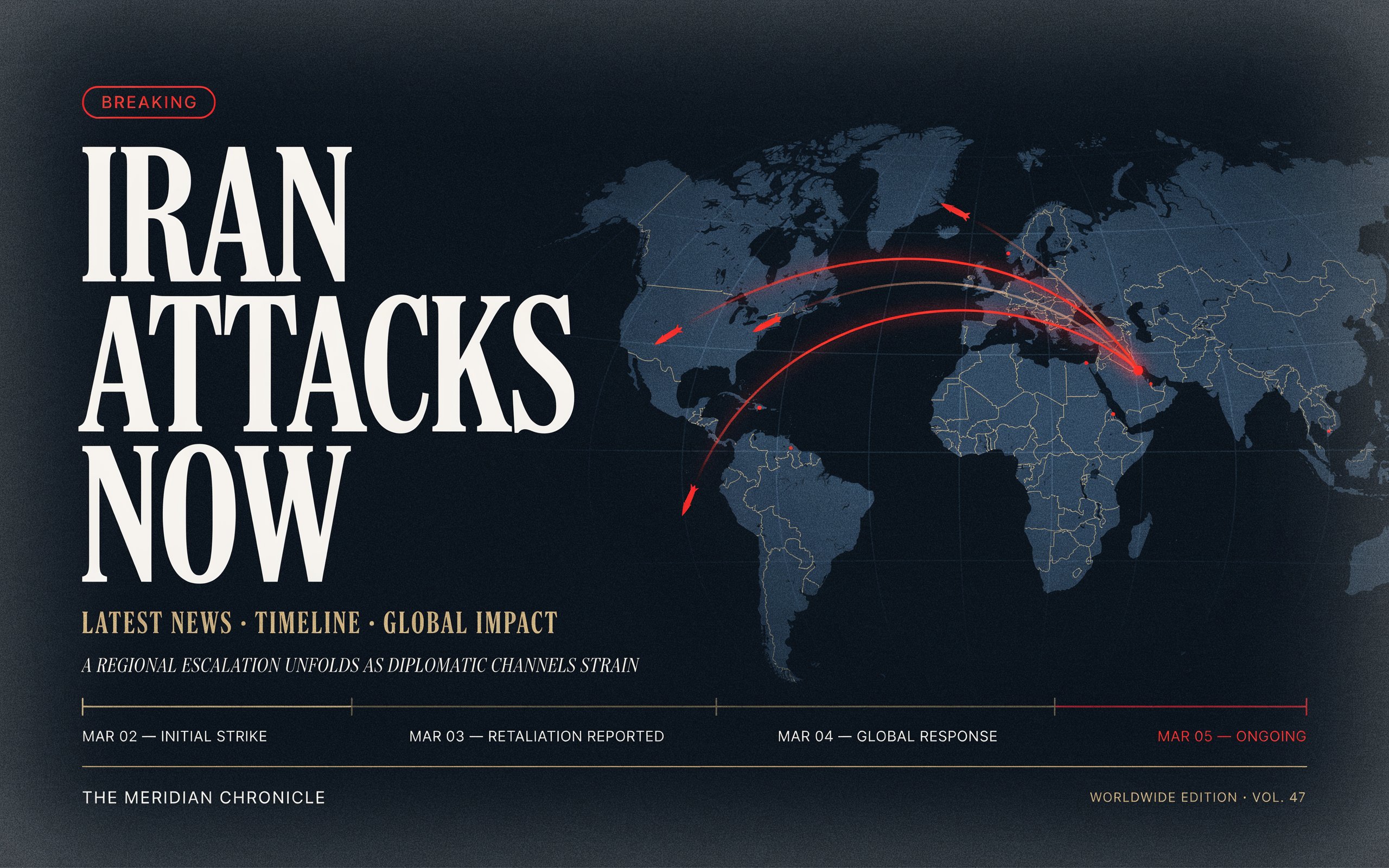
Since late February 2026, Iran has been engaged in an active military confrontation with the United States and Israel. Missiles and drones have struck across the Persian Gulf. The Strait of Hormuz — a narrow waterway through which roughly 20% of the world’s oil flows — has been repeatedly threatened and intermittently closed. And a fragile ceasefire is holding together by threads.
But understanding today’s Iran attacks requires knowing the full picture: from the ancient rivalry between Iraq and Iran, to the eight-year war that scarred an entire generation, to the current American-Iran war playing out in real time.
This article breaks it all down — clearly and without the jargon.
The Iran-Iraq War: Where the Tension Started
To understand why Iran attacks its neighbors and why the US remains deeply involved in the region, you have to go back to September 22, 1980. That’s the day Iraqi forces under Saddam Hussein invaded Iran, kicking off what became one of the deadliest conflicts of the twentieth century.
The war of Iran and Iraq lasted nearly eight years, finally ending with a UN-brokered ceasefire in August 1988. It was fueled by a toxic mix of territorial disputes, religious rivalry between Sunni-led Iraq and Shia-majority Iran, and Saddam’s fear that Iran’s 1979 Islamic Revolution would inspire uprisings among Iraq’s own Shia population.
Iraq and Iran War: Who Won?
Strictly speaking, neither side won. The ceasefire restored pre-war borders, and neither country received war reparations. Casualties were staggering — estimates range from one million to two million dead on both sides, with Iran suffering the greater losses.
However, in the long run, Iran arguably emerged in a stronger strategic position. The war galvanized the Islamic Revolutionary Guard Corps (IRGC) into a formidable military force and deepened Iran’s resolve to build regional influence. After Saddam Hussein’s fall in 2003 — brought about by the US invasion of Iraq — Iranian-backed Shia factions rose to dominate Iraqi politics. Some analysts argue that Iran effectively won the Iraq War fought by America, simply by filling the power vacuum left behind.
Are Iran and Iraq Allies Today?
It might seem strange after eight years of brutal warfare, but today Iran and Iraq share a remarkably close relationship — though it’s complicated.
Since 2003, Iraq has become Iran’s largest trading partner, with billions of dollars in non-oil exports flowing between the two countries annually. The Iraqi government is heavily influenced by Shia political parties with deep ties to Tehran. Iranian-backed militias, operating within Iraq’s Popular Mobilization Forces (PMF), number in the hundreds of thousands and wield considerable political power in Baghdad.
That said, the relationship is far from unconditional. During the current 2026 conflict, Iraq officially declared neutrality — but found it nearly impossible to stay out of the fray. Iranian-backed militias used Iraqi territory to launch attacks on US and Israeli interests, while US and Israeli strikes hit targets inside Iraq’s Kurdistan region. Baghdad is caught in a genuinely painful bind, squeezed between its two most powerful neighbors.
An opinion poll from 2019 found only 16% of Iraqis held a favorable view of the Iranian government — a reminder that government ties and popular sentiment don’t always align.
The American-Iran War: How We Got Here in 2026
The roots of the current American-Iran war stretch back decades — through the 1979 Islamic Revolution, the hostage crisis, sanctions, the 2015 nuclear deal, and its collapse. But the immediate trigger for the 2026 conflict came from a combination of nuclear standoff and domestic Iranian turmoil.
In early 2026, mass protests swept through Iran following a brutal government crackdown that killed thousands of civilians. President Trump responded to the massacre by initiating the largest US military buildup in the region since the 2003 Iraq invasion. Meanwhile, Israeli Prime Minister Netanyahu lobbied Washington for a joint military strike on Iran’s leadership and nuclear infrastructure.
Following high-level meetings in February 2026, Trump authorized “Operation Epic Fury.” On February 28, US and Israeli airstrikes hit Iranian military sites, government buildings, and resulted in the assassination of Supreme Leader Ali Khamenei and other senior officials. Iran fired back with hundreds of drones and ballistic missiles targeting Israel, US military bases, and Gulf Arab states that hosted American forces — including Saudi Arabia, Kuwait, Bahrain, the UAE, Qatar, Oman, and Jordan.
Iran Attacks in 2026: A Timeline of Key Events
Here is a clear breakdown of the major escalation points:
February 28, 2026 — War Begins US and Israeli airstrikes launch Operation Epic Fury. Iranian Supreme Leader Khamenei is killed. Iran retaliates with missile and drone barrages across the region.
Early March 2026 Iran blocks the Strait of Hormuz, triggering a global fuel crisis. Oil prices spike dramatically. Gulf Arab nations including Saudi Arabia, Kuwait, and the UAE retaliate militarily against Iranian strikes on their territory.
June 9–10, 2026 The US launches fresh waves of strikes against multiple Iranian targets. Iran threatens to permanently close the Strait of Hormuz to all vessels. The IRGC claims destruction of US facilities and aircraft at Al-Azraq air base in Jordan.
Mid-June 2026 A fragile ceasefire framework is negotiated. Trump announces a 60-day interim ceasefire. Qatar and Oman act as key intermediaries in back-channel negotiations.
June 26, 2026 Iran attacks a cargo vessel in the Strait of Hormuz, firing at least four one-way drones. One strikes the upper deck of a large crude oil tanker. Trump calls it a “foolish violation” of the ceasefire and the US strikes Iranian targets in retaliation.
June 28, 2026 Iran launches ballistic missiles and drones at US bases in Kuwait and Bahrain. A residential building in Bahrain is heavily damaged. Qatar condemns the attacks. A Qatari citizen is killed by shrapnel from military operations in the area. Iran also declares the Strait of Hormuz closed again, citing Israeli strikes on Lebanon as a violation of the ceasefire deal.
Global Reactions: How the World Is Responding
The Iran attacks and the broader US-Iran war have sent shockwaves far beyond the Persian Gulf.
Gulf Arab States — Saudi Arabia, Kuwait, Bahrain, and the UAE are directly in the line of fire. While they’ve condemned Iranian attacks on their soil, they’re also eager to see a negotiated end to the conflict, understanding that prolonged instability damages their economies and security.
Europe — European governments have largely tried to work with the Trump administration while urging de-escalation. NATO solidarity has come under strain. Most European nations were not consulted before Operation Epic Fury was launched, and there is significant unease with how the war began.
Russia and China — Both countries maintain strategic relationships with Iran. Neither has intervened militarily, but both have used the conflict as leverage in broader geopolitical negotiations with Washington.
Japan and South Korea — Both face pressure from Washington to support US operations, but domestic legislation prevents them from aiding active combat parties. The issue remains unresolved diplomatically.
The Global Economy — Perhaps the most immediate impact has been on energy markets. The Strait of Hormuz, through which a fifth of global oil supply passes, has been repeatedly disrupted. While Treasury Secretary Bessent has stated that gasoline prices are expected to fall as energy markets stabilize, the situation remains volatile.
The Strait of Hormuz: Iran’s Nuclear-Level Bargaining Chip
If there’s one geographic chokepoint that defines this entire conflict, it’s the Strait of Hormuz — a narrow waterway between Iran and Oman connecting the Persian Gulf to the Arabian Sea.
Iran has repeatedly threatened to close it, and has done so intermittently during the 2026 conflict. Every time Iran shuts or threatens to shut the strait, oil prices react and global shipping is disrupted. Some vessels have taken a riskier route hugging the Omani coastline, disabling their automatic identification systems to avoid Iranian detection.
This is Iran’s ultimate leverage. As one Al Jazeera analyst put it, the strait is “almost the only leverage that Iran has in the ongoing negotiations” — and Tehran knows that giving it up without something substantial in return would significantly weaken its hand at the table.
Trump, for his part, declared there would be no tolls charged for passing through the strait during or after the 60-day interim ceasefire period.
FAQ: Common Questions About Iran Attacks and the 2026 War
Q: Why did the US attack Iran in 2026?
The Trump administration cited multiple reasons: preventing Iran from building a nuclear weapon, destroying Iranian missile capabilities, forestalling Iranian retaliation against Israel, and regime change goals. The immediate trigger was the Israeli lobbying of Trump for a joint strike, combined with the Iranian government’s violent crackdown on domestic protests.
Q: Who won the Iran-Iraq War of the 1980s?
Neither side officially won. The war ended in a UN-brokered stalemate in 1988, with no border changes and no reparations paid by either side. However, in the decades since, Iran’s strategic influence grew substantially — particularly after the US removed Saddam Hussein in 2003, opening the door for Iranian-backed political factions to dominate Iraqi politics.
Q: Are Iran and Iraq allies in 2026?
In a complicated way, yes. The Iraqi government has declared neutrality in the US-Iran conflict, but Iranian-backed militias operate freely within Iraq and have launched attacks on US forces from Iraqi territory. Iran is Iraq’s largest trading partner. The relationship is deep but also contested — many ordinary Iraqis resent Iranian influence in their country.
Q: Is the Strait of Hormuz still open?
As of late June 2026, the situation is fluid. Iran has opened and closed the strait multiple times during the conflict. Some commercial shipping has resumed using routes near Omani waters, but the waterway remains a flashpoint for ceasefire violations and retaliatory strikes.
Q: What is the “Axis of Resistance”?
It’s the informal coalition of Iran-aligned armed groups across the Middle East, including Hezbollah in Lebanon, Hamas in Gaza, Houthi forces in Yemen, and various militias within Iraq’s Popular Mobilization Forces. Iran provides these groups with funding, weapons, and training, using them to project power across the region without always fighting directly.
Conclusion: What Comes Next
The 2026 Iran conflict is one of the most consequential events in Middle Eastern history since the 2003 invasion of Iraq. A fragile ceasefire is in place, but it has been violated repeatedly by both sides — and the situation remains genuinely unpredictable.
What’s clear is that decades of unresolved tension — rooted in the Iran-Iraq war of the 1980s, the rise of Iranian regional influence, the nuclear standoff, and repeated cycles of US-Iran confrontation — have brought us to this point. The Strait of Hormuz sits at the heart of it, and so does the question of what a post-war Iran looks like.
For anyone following these events, staying informed from reliable, up-to-date sources matters more than ever. Bookmark credible news outlets, watch for developments in the ceasefire negotiations, and pay attention to how energy markets respond — because what happens in the Persian Gulf affects every corner of the world.






Post Comment