The Most Common Surprises in Vintage Chicago Condo Inspections
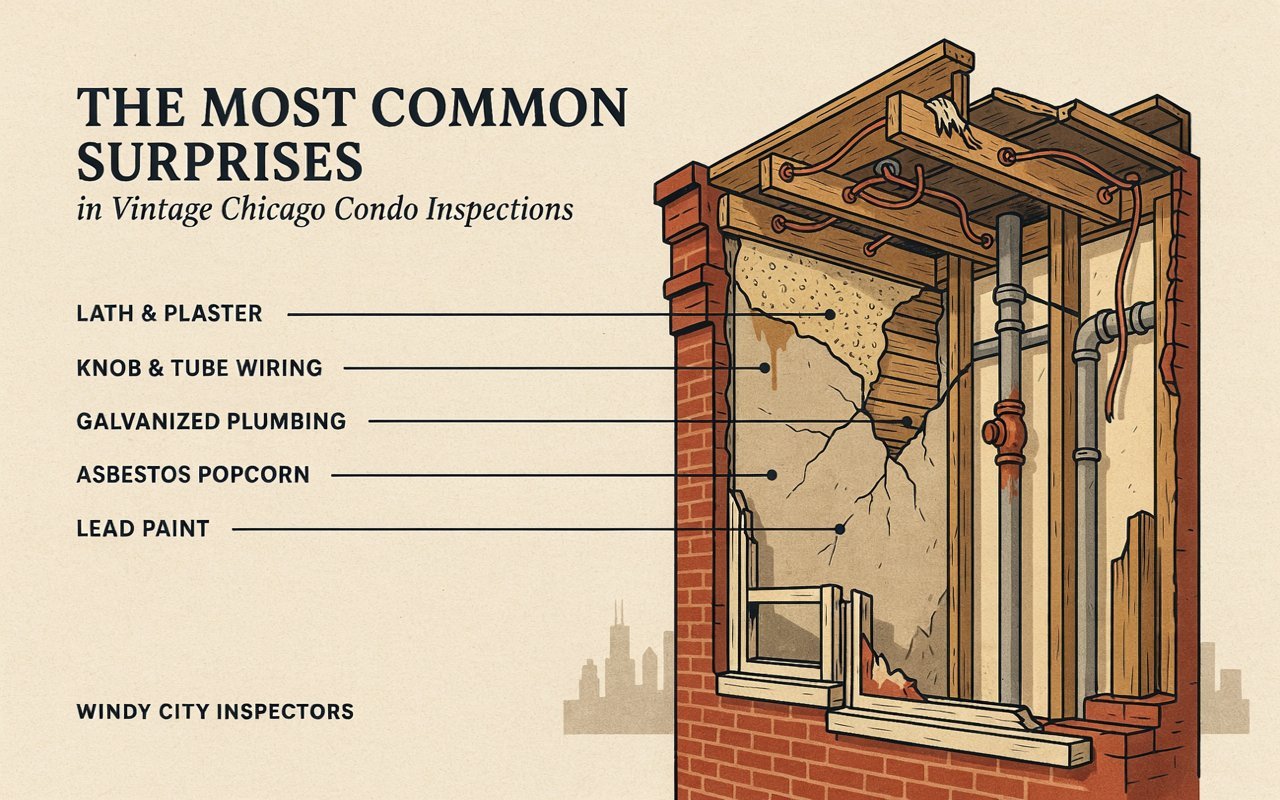
Buying a condo in one of Chicago’s older buildings, the courtyard buildings of Rogers Park, the graystones of Bronzeville, the prewar high-rises along the lake, comes with a different inspection checklist than buying a single-family home. Units themselves are often move-in ready. The problems tend to live in the building’s bones.
Shared Plumbing Risers Are a Blind Spot
A condo inspection in Chicago can only evaluate what is inside the unit and immediately accessible. The vertical plumbing risers that run through every floor of the building are shared infrastructure, owned collectively through the association, and they are frequently original to buildings constructed before the 1970s. Corrosion or reduced flow in these risers does not always show up as an obvious problem in any single unit, which is why buyers are often caught off guard when a special assessment for riser replacement appears years after closing.
Outdated Electrical Panels Are More Common Than Buyers Expect
Panels from brands like Zinsco and Federal Pacific were installed widely through the mid-twentieth century and have since been linked to breaker failures that do not trip properly during an overload. These panels still show up regularly in older Chicago units, and while replacing one is a manageable cost, insurance carriers increasingly ask about panel brand before writing a policy, which can complicate closing if the issue is discovered late.
Window and Masonry Water Intrusion Is Often Invisible Until It Isn’t
Vintage courtyard and high-rise buildings rely on masonry and window seals that were never designed to last a century without maintenance. Water intrusion around aging frames or through deteriorating mortar joints tends to show up first as minor staining, easy to miss during a quick showing, well before any visible leak. A thorough inspection looks specifically for this staining pattern rather than waiting for obvious water damage.
Financial Stability Plays a Key Role in a Building’s Long-Term Value
A condo inspection covers the physical unit, not the association’s reserve fund. Buyers who skip reviewing the reserve study and recent meeting minutes sometimes discover, only after closing, that a major roof or facade project is already planned and will be funded through a special assessment. This information typically has to be requested separately from the seller or the association, not from the inspector.
Not Every Inspector Has Vintage-Building Experience
General home inspectors are trained broadly, but buildings from the 1900s through the 1960s have specific, recurring issues, riser age, panel brand, masonry condition, that an inspector unfamiliar with vintage Chicago stock might not flag with the same urgency. Buyers shopping for a home inspection company for a prewar or midcentury building are generally better served by one that lists vintage or multi-unit experience specifically, rather than a generalist inspector whose primary experience is newer suburban construction.
The Bottom Line
None of these issues make older Chicago buildings a poor investment. The character, location, and price point of vintage condos remain a major draw, and most of these problems are manageable once identified. The core advice from anyone who has been through the process more than once stays consistent: know what the inspection can and cannot see, and go after the building-level information separately, before the contingency window closes rather than after.






Post Comment